
💛 Why Patience Is So Hard for Kids
If your child struggles to wait, you are not alone.
Patience is one of the hardest skills for children to learn—especially for kids with big feelings, ADHD, or autism.
To them, waiting doesn’t feel small.
It can feel overwhelming, frustrating, and sometimes even impossible.
Their brains are wired for:
👉 “I want it now.”
—not—
👉 “I can wait.”
And that doesn’t mean something is wrong.
It just means they need support, practice, and tools.
🔥 What Patience Really Means (For Kids)
Patience isn’t just “waiting nicely.”
It’s the ability to:
- Pause before reacting
- Handle frustration
- Manage excitement
- Try again when things don’t go as planned
A simple way to explain it to kids:
👉 “Patience means slowing your body down.”
🧠 How to Teach Patience (That Actually Works)
1. Teach Awareness First
Kids can’t control what they don’t understand.
Say:
- “Your body feels fast right now.”
- “I see you’re getting really excited.”
This helps them recognize what’s happening inside.
2. Give Them a Strategy (Not Just “Wait”)
Instead of saying “wait,” teach them how.
Try:
- Deep breathing
- Counting slowly
- Watching a timer
- Holding a small object
👉 Waiting becomes something they do, not something they’re forced into.
3. Model Patience Out Loud
Let them hear you practice it.
- “I feel frustrated, so I’m going to take a breath.”
- “I really want this now, but I’m going to wait.”
Kids learn more from what we show than what we say.
4. Practice During Everyday Moments
Patience is built in small, daily situations:
- Waiting for food
- Taking turns
- Pausing before opening something exciting
These tiny moments are where real learning happens.
💥 What To Do When Things Don’t Go Their Way
This is when patience feels hardest.
Instead of saying:
- “Just wait”
- “Calm down”
Try guiding them:
- “That feels really hard right now.”
- “Let’s slow your body together.”
- “Take a breath with me.”
Try This Simple Reset:
1. Pause
👉 “Let’s stop our bodies.”
2. Breathe
👉 Slow inhale… slow exhale
3. Try Again
👉 “Let’s do it one more time.”
🌟 A Gentle Way to Teach Patience Through Story
Sometimes, kids don’t learn best through instructions…
They learn through stories.
Stories help children:
- See themselves in the character
- Understand emotions without pressure
- Practice skills in a safe, relatable way
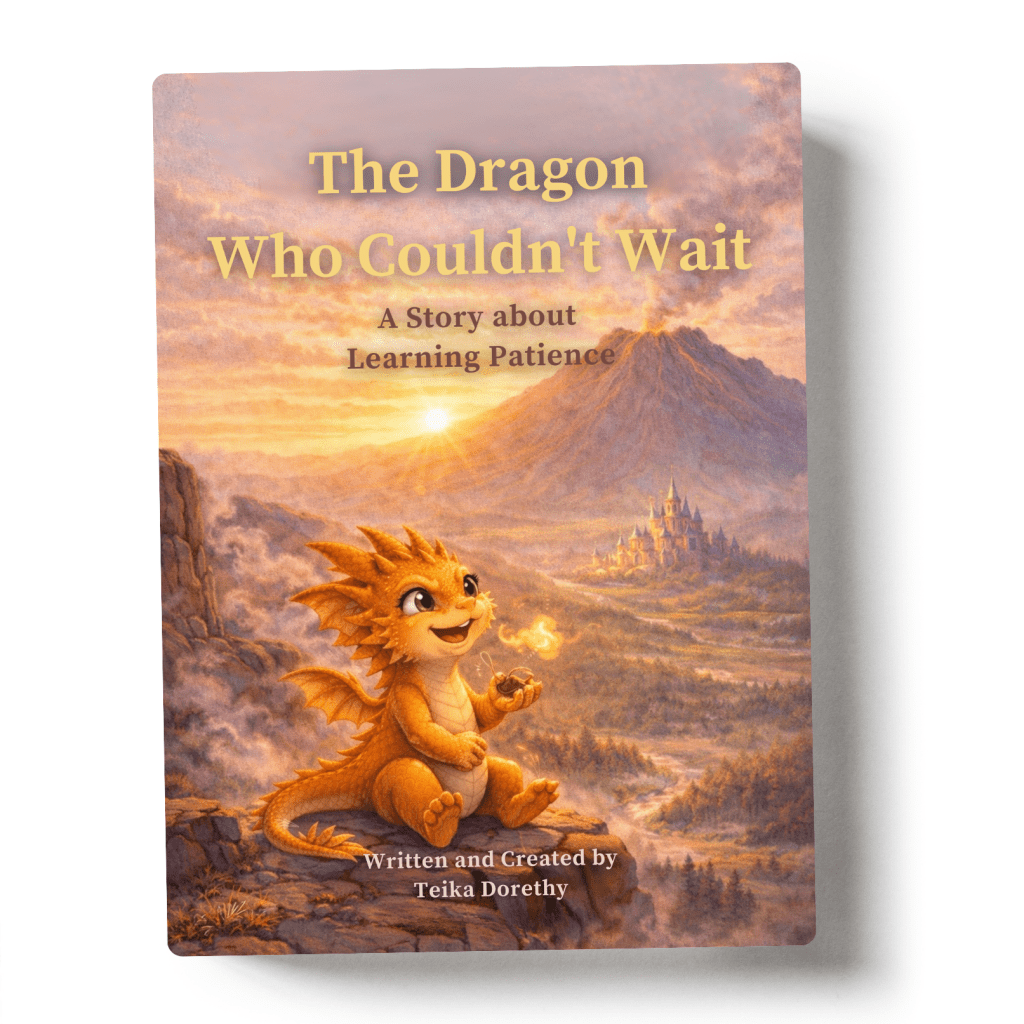
Meet Daisy the Dragon
Daisy is a dragon with a big fire.
When she feels excited, it flickers.
It flares.
It rushes ahead.
Sometimes… it grows faster than she can manage.
But Daisy is learning something important:
Her fire is not meant to scorch the world.
It is meant to warm it.
In The Dragon Who Couldn’t Wait, Daisy learns how to:
- Slow down
- Breathe through big feelings
- Try again when things don’t go her way
And most importantly…
✨ She learns that patience doesn’t make her smaller—it makes her stronger.
👉 You can find the story here:
The Dragon Who Couldn’t Wait: A Story About Learning Patience (Magical Creatures, Mighty Feelings): Dorethy, Teika: 9798246404546: Amazon.com: Books
💛 Extra Support for Emotional Regulation
If your child is working on patience, it often helps to pair stories with visual tools and supports.
You can explore emotional regulation resources here:
👉 Emotional Regulation Bundle for Kids, Visual Coping Tools, Complete With a How-to Guide – Etsy
These tools help children:
- Understand their feelings
- Practice calming strategies
- Build independence
🌟 The Big Takeaway
Patience isn’t something we force.
It’s something we teach, model, and practice over time.
And just like Daisy…
✨ Kids don’t need their fire taken away.
They just need to learn how to guide it.
 Ava Has Autism
Leave a comment