
If you’ve ever found yourself saying…
- “Why won’t they listen?”
- “I just told you what to do.”
- “They know what I mean… so why aren’t they doing it?”
You’re not alone.
I’ve been there too.
As both a former special educator and a parent to a child with autism, I had to unlearn something important:
Not following directions is usually not about defiance.
It’s often about understanding, processing, and support.
And once I shifted how I approached it… everything started to change.
💬 First—Let’s Rethink “Not Listening”
When a child doesn’t follow directions, it’s easy to assume:
👉 They’re ignoring you
👉 They’re being defiant
👉 They just don’t want to
But for many children—especially autistic children—the real reasons are very different:
- They didn’t fully understand the direction
- It was too many steps at once
- They needed more time to process
- It wasn’t presented in a way they could access
👉 What looks like “not listening” is often “not yet able to follow.”
🧠 1. Keep Directions Simple (One Step at a Time)
This was one of the biggest shifts for us.
Instead of:
👉 “Go upstairs, clean your room, and put your shoes away”
Try:
👉 “Go upstairs”
(wait)
👉 “Clean your room”
(wait)
Breaking directions into single steps makes them more manageable and less overwhelming.
Why it works:
It reduces cognitive load and gives your child a clear starting point.
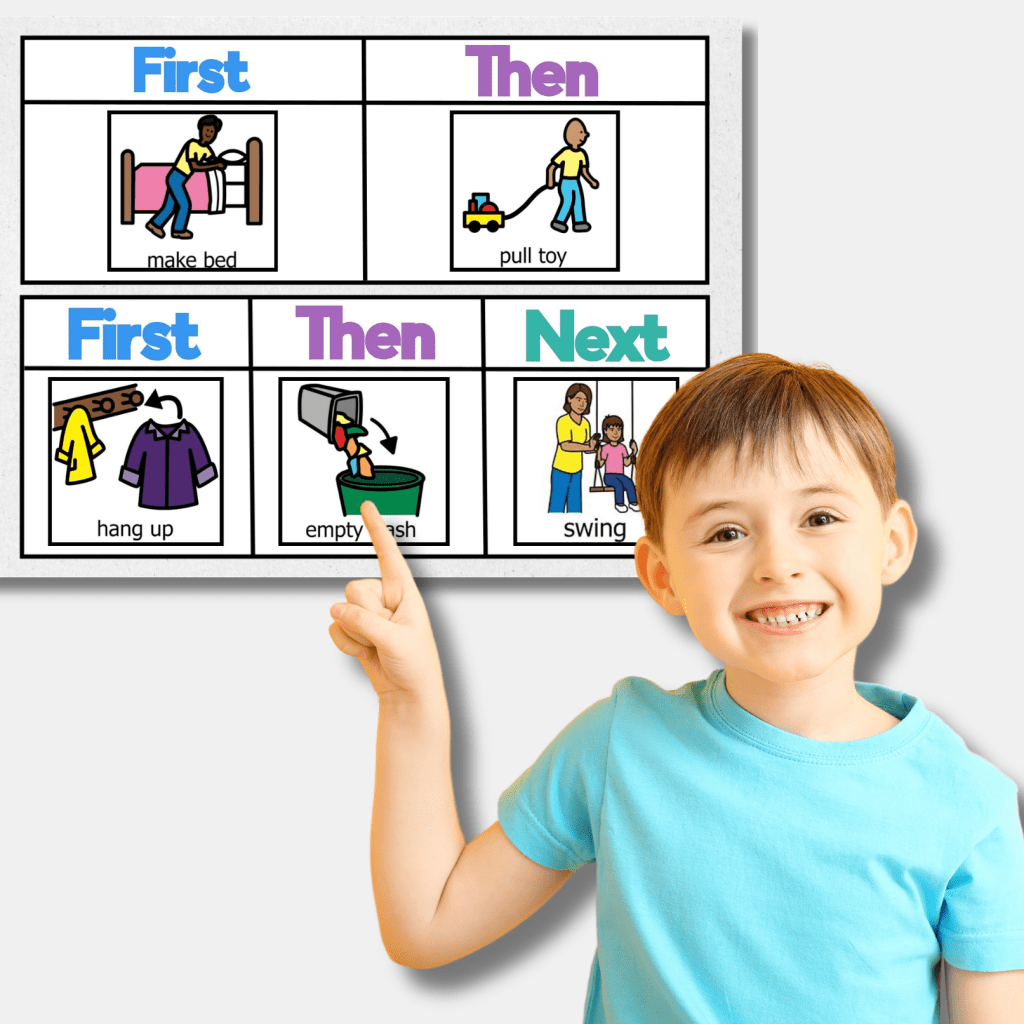
🧩 2. Use Visual Supports (This Changed Everything)
Words disappear. Visuals stay.
Many children process visual information better than spoken language—especially when overwhelmed.
Try:
- First/Then boards
- Visual schedules
- Picture cues (clean up, sit, wait, line up)
👉 Example:
Show “First clean up → Then play”
Why it works:
Visuals make expectations clear and predictable.
⏳ 3. Give Processing Time (This Is HUGE)
One of the most overlooked pieces…
Your child may need extra time to process what you said.
After giving a direction:
👉 Pause
👉 Wait (5–10 seconds or more)
Avoid repeating too quickly—it can actually increase confusion.
Why it works:
It allows your child’s brain time to understand and respond.
🔁 4. Show, Don’t Just Tell
Instead of only giving verbal directions, model the action.
👉 Say + show:
“Shoes on” (while pointing or demonstrating)
You can also:
- Gently guide the first step
- Use gestures or visuals
Why it works:
It connects language to action.
🎯 5. Use First/Then to Build Motivation
This strategy is simple—but powerful.
👉 “First work → Then iPad”
👉 “First clean up → Then snack”
Why it works:
It gives your child a clear reason to complete the task.
🧼 6. Practice Directions During Calm Moments
Trying to teach during frustration rarely works.
Instead:
- Practice when your child is calm
- Turn it into a game
- Keep it short and positive
👉 Example:
“Touch your head”
“Clap your hands”
“Sit down”
Build success first—then expand.
⚠️ 7. Reduce Overwhelm (This Impacts Everything)
If a child is:
- overwhelmed
- tired
- overstimulated
They may not be able to follow directions—even if they can at other times.
Look at:
- environment (noise, clutter)
- timing (transitions, hunger, fatigue)
- expectations (too much at once?)
👉 Regulation comes before cooperation.
🧡 What Helped Us the Most
For us, the biggest shift wasn’t getting stricter…
It was getting clearer, simpler, and more supportive.
Once I:
✔ broke directions down
✔ added visuals
✔ gave more processing time
I saw:
- less frustration
- more cooperation
- more independence
And most importantly… more connection.
🛍️ Looking for Simple Tools That Support Following Directions?
If you’re not sure where to start, I’ve created visual supports and structured tools designed to help children understand and follow directions—without overwhelm.
These include:
- First/Then boards
- Visual schedules
- Communication supports
- Step-by-step systems
👉 Explore them here: All-in-one Visual Schedule System, AM/PM Routine, Chores, First/then Chart – Etsy
Daily Routine Wall Pocket Visual Schedule – Etsy
💬 Final Thoughts
If your child isn’t following directions, it doesn’t mean they won’t…
It means they need support in a way that works for them.
Start small. Stay consistent. And shift from “Why aren’t they listening?” to:
👉 “How can I make this clearer?”
That’s where real progress begins.
— Teika, creator of Ava Has Autism
 Ava Has Autism
Leave a comment