
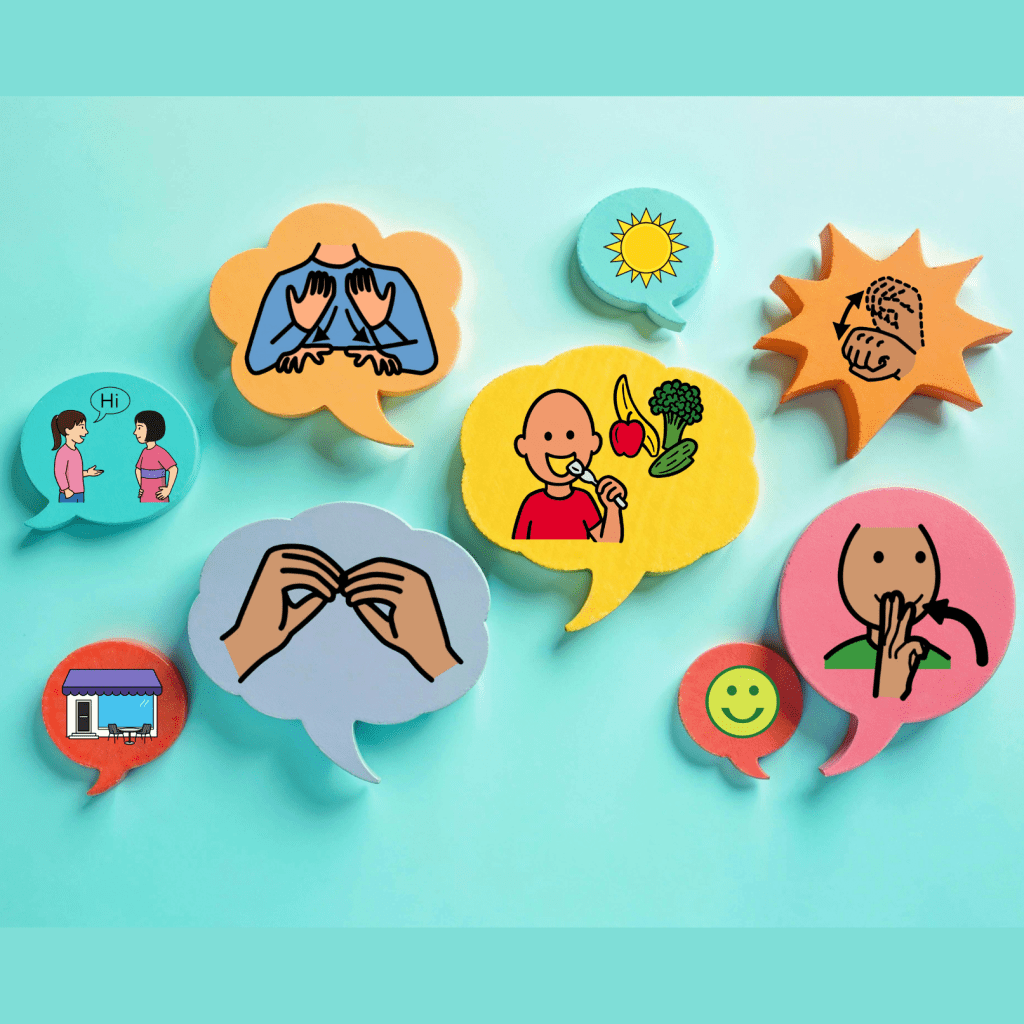
When your child isn’t speaking, it can feel overwhelming, confusing, and even isolating.
You may find yourself wondering:
- Will they ever talk?
- Am I doing enough?
- How do I help them communicate right now?
I’ve been there.
My daughter Ava was nonverbal—and that experience changed everything for me. Not just as a parent, but as a former special educator. I quickly realized something important:
Speech is not the only way to communicate.
And once we shifted our focus from “talking” to “communication,” everything began to change.
💬 First, Let’s Reframe What “Nonverbal” Means
Nonverbal does not mean:
- Your child has nothing to say
- Your child can’t understand
- Your child won’t communicate
It simply means your child communicates differently.
Many nonverbal children:
- Understand far more than they can express
- Use gestures, pointing, or leading
- Communicate through behavior
👉 Behavior is often communication.
When we don’t give children a way to express themselves, frustration builds—and that’s when we see meltdowns, shutdowns, or challenging behaviors.
🧩 1. Start With Visual Communication
Visual supports are often the bridge to communication.
Many autistic children process visual information more easily than spoken words. Giving them something they can see and use changes everything.
Start simple:
- Picture cards (eat, drink, help, bathroom)
- Choice boards (2–4 options)
- First/Then boards
👉 Example:
Instead of asking, “What do you want?”
You show: 🍎 or 🥨
Why this works:
It removes pressure and gives your child a clear, accessible way to respond.
🧠 2. Use a Functional Communication System (Not Just Random Tools)
Consistency matters more than complexity.
Choose a system and use it throughout the day:
- Requesting (I want…)
- Protesting (no, stop)
- Asking for help
- Asking for a break
Tools can include:
- Picture communication cards (PCS-style)
- Communication boards
- Core word boards
👉 The goal is not perfection—it’s access.
🧡 3. Honor All Forms of Communication
Communication is not just words.
If your child:
- Points
- Brings you items
- Looks toward something
- Uses sounds or gestures
👉 That counts.
The key is to acknowledge it and build on it.
Example:
Child reaches for snack →
You say: “Snack! You want a snack.” (while showing the visual)
This builds connection between:
➡ action
➡ word
➡ meaning
🔁 4. Model, Model, Model (Without Pressure)
Your child does not need to repeat you to learn.
Instead of saying:
👉 “Say snack”
Try:
👉 Show + say: “Snack” (while handing the item)
This is called modeling, and it’s one of the most effective ways to build communication.
Important:
Remove pressure. Communication should feel safe—not forced.
🧼 5. Build Communication Into Daily Routines
The best learning happens in real life—not at a table.
Use everyday moments:
- Mealtime → choices + requesting
- Bath time → labeling + routine words
- Play → turn-taking + requesting
- Outings → help, stop, go
👉 Repetition in real contexts builds understanding faster than drills.
⚠️ 6. Reduce Frustration (This Changes Behavior)
Many “behavior challenges” come from:
👉 not being able to communicate
When a child gains even a small way to express:
- needs
- wants
- discomfort
You’ll often see:
✔ fewer meltdowns
✔ more engagement
✔ increased connection
🧩 7. Start Small (You Don’t Need Everything at Once)
You do NOT need:
- a complicated system
- expensive devices
- 100 visuals at once
Start with:
✔ 5–10 core visuals
✔ 1 simple system
✔ daily use
Consistency is what creates progress.
✨ What Helped Us the Most
When Ava was nonverbal, what made the biggest difference wasn’t forcing speech…
It was giving her a way to be heard.
Once she could communicate:
- her frustration decreased
- her confidence grew
- her connection with us deepened
And over time… communication expanded in ways I never expected.
🛍️ Looking for Simple, Ready-to-Use Communication Tools?
If you’re not sure where to start, I’ve created communication supports designed for real-life use—based on both my experience as a special educator and my journey as a parent.
These include:
- Beginner communication cards
- Choice boards
- Functional communication systems
- Step-by-step support tools
👉 Explore them here:
Autism Next Level Communication Bundle – Etsy
Special Education AAC Communication Toolkit | Autism | Nonverbal
💬 Final Thoughts
If your child is nonverbal, please hear this:
They still have a voice.
Our job is to help them access it.
Start small. Stay consistent. And most importantly—believe in their ability to communicate.
Because communication is not just about words…
It’s about connection.
— Teika, creator of Ava Has Autism
 Ava Has Autism
Leave a comment