
How to Use Visual Schedules, Picture Communication & Structured Supports at Home and School
Visual supports are one of the most powerful tools for autistic children — yet many families are unsure how to use them effectively.
If you’ve ever wondered:
- What are visual supports for autism?
- Do visual schedules really reduce meltdowns?
- How do I start using picture communication?
- What types of visual supports work best?
This complete guide will walk you through everything you need to know about visual supports for autism — what they are, why they work, and how to implement them step by step.
What Are Visual Supports?
Visual supports are tools that use images, symbols, words, or objects to help autistic individuals understand expectations, routines, communication, and transitions.
Because many autistic children process information visually more effectively than verbally, visual supports reduce confusion and increase predictability.
Common types of visual supports include:
- Visual schedules
- First/Then boards
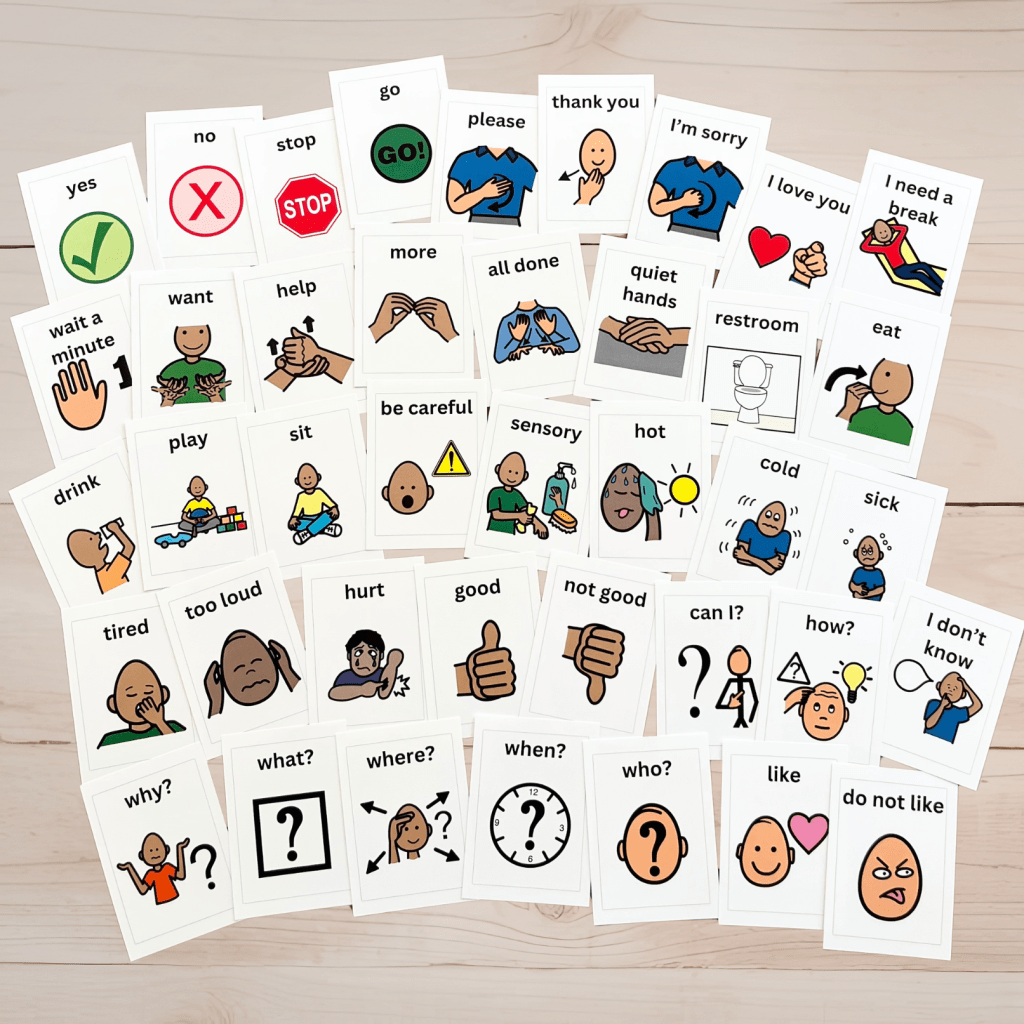
- Picture communication cards
- Choice boards
- Behavior expectation visuals
- Social story visuals
- Routine charts
- Task breakdown charts
Visual supports provide clarity. And clarity reduces anxiety.
Why Visual Supports Work for Autism
Autistic children often experience:
- Processing delays
- Difficulty with verbal instructions
- Executive functioning challenges
- Anxiety around transitions
- Sensory overwhelm
Visual supports help by:
✔ Making expectations visible
✔ Breaking tasks into manageable steps
✔ Reducing repeated verbal prompting
✔ Increasing independence
✔ Providing predictability
When expectations are seen, not just spoken, children feel more secure.
Types of Visual Supports (And When to Use Them)
1. Visual Schedules
A visual schedule outlines the order of activities in a day.
Use visual schedules when:
- Mornings feel chaotic
- Transitions trigger meltdowns
- Your child constantly asks “what’s next?”
- You want to build independence
Schedules can be:
- Full day schedules
- Morning-only schedules
- After-school routines
- Bedtime routines
Visual schedules reduce anxiety because the day becomes predictable.
2. First/Then Boards
A First/Then board shows:
First: Complete task
Then: Preferred activity
Example:
First → Brush teeth
Then → iPad time
These are excellent for:
- Increasing task completion
- Reducing resistance
- Building motivation
3. Picture Communication Supports
Picture communication cards allow children to express needs when verbal language is limited or overwhelmed.
They can include:
- “Break”
- “Help”
- “Bathroom”
- “Snack”
- “I feel angry”
Communication visuals reduce frustration behaviors caused by unmet needs.
4. Choice Boards
Choice boards give controlled options.
Instead of:
“What do you want?”
You show:
Snack A or Snack B
This prevents overwhelm and builds decision-making skills.
5. Task Breakdown Charts
These break complex activities into small steps.
Example:
Brushing teeth might include:
- Get toothbrush
- Put toothpaste on
- Brush top teeth
- Brush bottom teeth
- Rinse
Task visuals build independence and reduce constant prompting.
How to Start Using Visual Supports (Step-by-Step)
If you are new to visual supports, start small.
Step 1: Identify One Struggle Area
Choose a routine that causes stress — mornings, homework, bedtime.
Step 2: Create a Simple Visual
Use 3–5 images only. Do not overwhelm.
Step 3: Model It Consistently
Point to the visual while speaking.
Step 4: Reduce Verbal Repetition
Instead of repeating instructions, point to the visual.
Step 5: Practice Daily
Consistency builds understanding.
Start with one routine. Then expand.
Common Mistakes When Using Visual Supports
• Making them too complicated
• Changing them daily
• Not teaching how to use them
• Talking over the visual instead of pointing
• Expecting instant independence
Visual supports must be explicitly taught.
Visual Supports at Home vs School
At Home:
- Morning routine charts
- Chore visuals
- First/Then boards
- Bedtime schedules
At School:
- Classroom schedule
- Calm corner visuals
- Social expectation charts
- Task breakdown visuals
Consistency between home and school strengthens skill development.
Do Visual Supports Reduce Meltdowns?
Visual supports reduce meltdowns caused by:
- Transition anxiety
- Unclear expectations
- Communication frustration
- Sensory unpredictability
They do not eliminate sensory overload — but they significantly reduce anxiety-driven behaviors.
Predictability = safety.
Building Independence Through Visual Supports
The long-term goal is not dependence on visuals.
The goal is:
Visual → Understanding → Routine → Internalization
Over time, many children require fewer prompts.
Visual supports are scaffolding.
Structured Visual Supports for Families
If you’re unsure how to design effective visual supports, structured printable systems can make implementation easier.
My beginner visual supports bundle includes:
✔ Visual schedule templates
✔ First/Then boards
✔ Picture communication starter cards
✔ Routine charts
✔ Step-by-step instruction guide
Designed specifically for families beginning their journey with visual supports for autism.
Autism Communication Boards, Visual Schedules | Ava Has Autism
Free Visual Communication Starter Pack for Autism – Ava Has Autism
BoardMaker All-In-One 400+ Icons Large Print Communication Cards and 10 Boards
You can start small and build from there.
Final Thoughts
Visual supports are not “extra.”
For many autistic children, they are essential.
They provide:
- Structure
- Clarity
- Communication
- Emotional regulation
- Independence
When used consistently and intentionally, visual supports transform chaotic routines into predictable systems.
Start small. Stay consistent. Build outward.
 Ava Has Autism
Leave a comment