
A Simple Guide for Families, Teachers, and Children of All Abilities
Communication is one of the most powerful things we give our children.
Being able to say what they need, how they feel, and what they want helps them feel safe, confident, and understood.
That’s why ASL (American Sign Language) is so special.
ASL isn’t just for people who are deaf or hard of hearing. It is a beautiful, effective way for all children to communicate — including babies, toddlers, non-speaking children, autistic children, and kids who are still learning how to use their voice.
In our home, sign language became a bridge — a way to connect before words were ready.
🧠 What Is ASL?
ASL (American Sign Language) is a full, real language that uses hand movements, facial expressions, and body language to communicate.
It allows people to:
• express wants and needs
• share feelings
• ask questions
• connect with others
For young children, especially those who struggle with speech, ASL gives them a way to communicate without frustration.
💛 Why So Many Families Are Learning Sign Language
There is a growing interest in learning ASL — and for good reason.
Families are discovering that sign language:
• supports early communication
• reduces meltdowns
• builds confidence
• strengthens bonds
• and makes everyday life easier
When children can communicate, even without spoken words, they feel more in control of their world.
That feeling of being understood is powerful.
🌟 How ASL Helps Children of All Abilities
ASL is helpful for:
• non-verbal children
• autistic children
• toddlers and babies
• children with speech delays
• children learning two languages
• and even typically developing children
Using signs allows children to:
• ask for food, toys, or help
• express feelings
• say “more,” “all done,” or “stop”
• communicate before speech develops
It also supports:
• language development
• motor skills
• focus and attention
• and emotional regulation
Many children will sign before they can speak — and that is completely okay.
🧩 ASL and Emotional Regulation
When a child can sign:
“I’m mad.”
“I’m tired.”
“I need help.”
…they don’t have to show it with their body.
This means:
• fewer meltdowns
• less frustration
• and more calm
Communication is one of the most important tools for emotional regulation.
🖐 Why Visual ASL Boards Are So Helpful
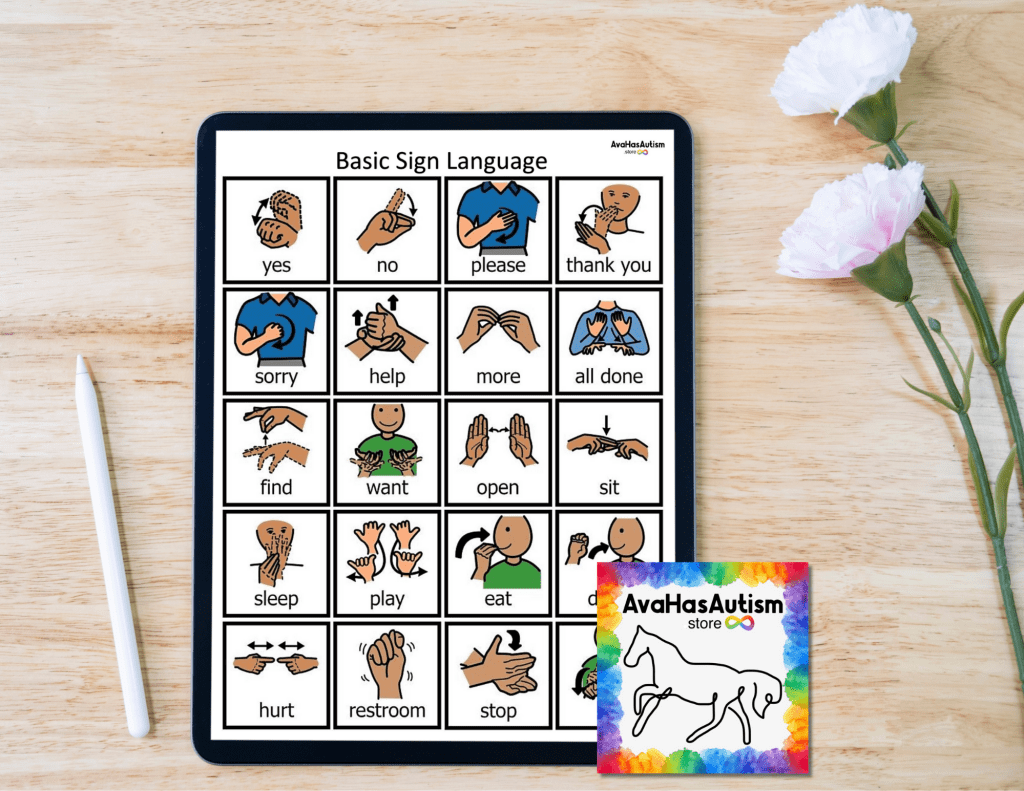
While learning signs through videos or books is great, visual ASL boards make sign language easier and more accessible for young children.
A sign language board:
• shows the sign clearly
• stays in front of the child
• can be pointed to
• and helps connect signs to meaning
This is especially helpful for:
• non-speaking children
• children with autism
• visual learners
• and early communicators
Visual supports make learning feel safe and predictable.
🏡 How to Use ASL at Home
You don’t need to know every sign to get started.
Begin with just a few:
• more
• eat
• drink
• help
• all done
• please
• thank you
Use signs naturally while you speak.
Point to your sign language board.
Model calmly.
Your child will begin to understand — even before they can respond.
💬 A Gentle Reminder
Using sign language does not delay speech.
In fact, it often helps speech develop by giving children a way to practice communication.
Your child is not failing because they don’t speak yet.
They are learning — and ASL gives them a voice along the way.
🌈 Learn More About ASL Support Tools
If you’d like to explore visual ASL supports for your child, you can find my ASL Sign Language Board in my shop.
👉 Basic Sign Language Board- Digital Download – Etsy
👉 Ava Has Autism | Teachers Pay Teachers
👉 ASL- Basic Sign Language Board – Ava Has Autism
👉 ASL, 260 Cards From Boardmaker, 2.5 Inch Square, Digital Download – Etsy
It was created with love, real-life experience, and the belief that every child deserves a way to communicate.
 Ava Has Autism
Leave a comment