
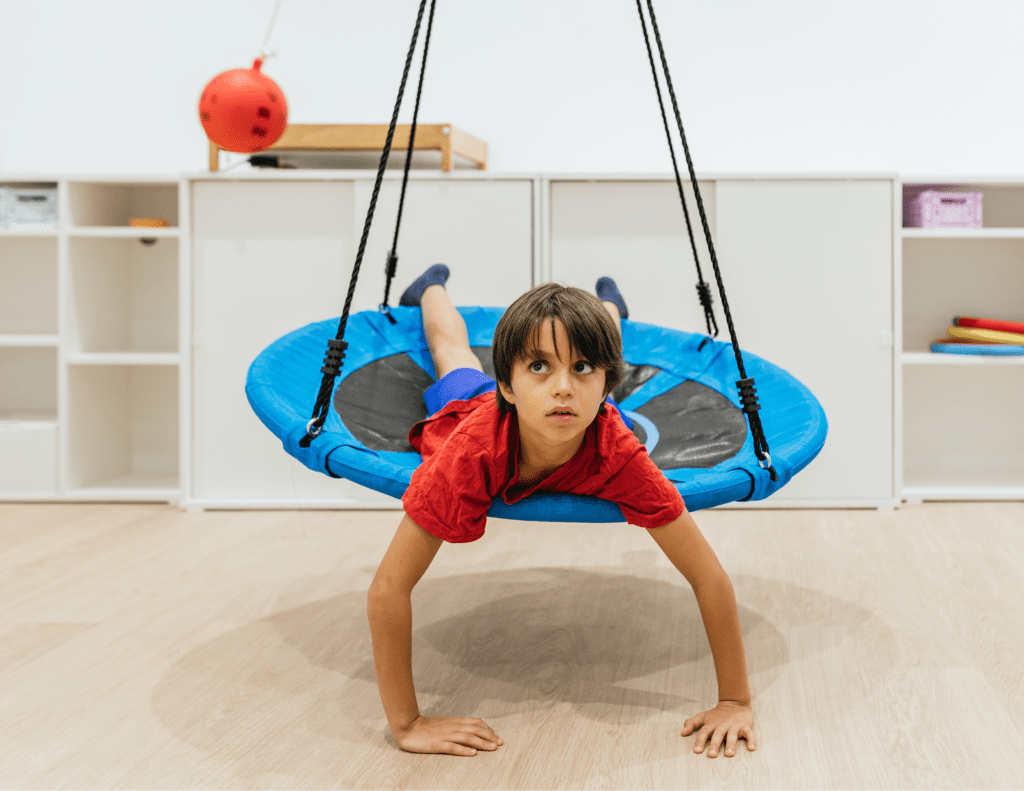
Sensory input plays a powerful role in how children experience the world.
For many autistic children—and children with ADHD, sensory processing differences, or emotional regulation challenges—sensory input isn’t just helpful. It’s essential.
As a parent of a neurodivergent child and an educator, I’ve seen firsthand how the right sensory support can reduce overwhelm, improve focus, and help children feel safe in their bodies. Sensory tools are not about “fixing” behavior. They’re about supporting the nervous system so children can function, learn, and connect.
What Is Sensory Processing?
Sensory processing is how the brain receives, organizes, and responds to information from the senses:
- Touch
- Movement (vestibular input)
- Body awareness (proprioception)
- Sound
- Visual input
When sensory input is overwhelming—or when the body isn’t getting enough of the right kind of input—children may struggle with meltdowns, anxiety, restlessness, or emotional shutdown.
Sensory supports help bridge that gap.
Why Sensory Input Helps With Emotional Regulation
Many behaviors that look like “misbehavior” are actually signs of a nervous system in distress.
Sensory tools help by:
- Regulating the nervous system
- Providing predictable, calming input
- Reducing sensory overload
- Helping children feel grounded and secure
When a child’s body feels regulated, emotional regulation becomes possible.
Common Benefits of Sensory Support
🌿 Calming the Nervous System
Deep pressure, slow movement, and tactile input can help reduce anxiety and overwhelm. This is especially helpful during transitions, busy environments, or moments of stress.
🧠 Improved Focus and Attention
Some children need movement or tactile input to stay engaged. Sensory tools can help the brain stay alert without becoming overstimulated.
🤍 Increased Emotional Awareness
When children feel safe in their bodies, they are more able to recognize and communicate emotions instead of reacting impulsively.
🧩 Support for Daily Routines
Sensory input can make daily tasks—like getting dressed, sitting for schoolwork, or winding down at bedtime—more manageable.
Sensory Support Looks Different for Every Child
There is no one-size-fits-all sensory solution.
Some children seek:
- Movement (swinging, rocking, climbing)
- Deep pressure (compression, hugs, weighted input)
- Tactile input (brushing, fidgeting, squeezing)
- Visual calming input (slow motion, liquid timers)
Others may need help reducing sensory input, such as noise or visual clutter.
The goal is not to overwhelm—but to match the child’s needs.
Sensory Tools Are Supports, Not Rewards
Sensory tools should never be treated as something a child has to “earn.”
They are accommodations—just like glasses help vision, sensory supports help regulation.
When we meet sensory needs proactively, we often see fewer meltdowns, better communication, and more emotional resilience.
How Sensory Support Helps the Whole Family
When children feel regulated:
- Parents experience less stress
- Transitions become smoother
- Communication improves
- Everyone feels more supported
Sensory tools don’t just help children—they help families function with more calm and connection.
A Parent-Created Approach to Sensory Support
Everything I share and create comes from lived experience—as a parent navigating sensory needs at home and as an educator supporting children in real-world environments.
Sensory support isn’t about perfection.
It’s about understanding, compassion, and meeting children where they are.
🌈 Final Thought
Sensory needs are not problems to eliminate.
They are messages from the body asking for support.
When we listen—and respond with the right tools—we help children feel safe, capable, and understood.
Explore sensory tools designed to support calm routines, emotional regulation, and everyday independence.
 Ava Has Autism
Leave a comment